
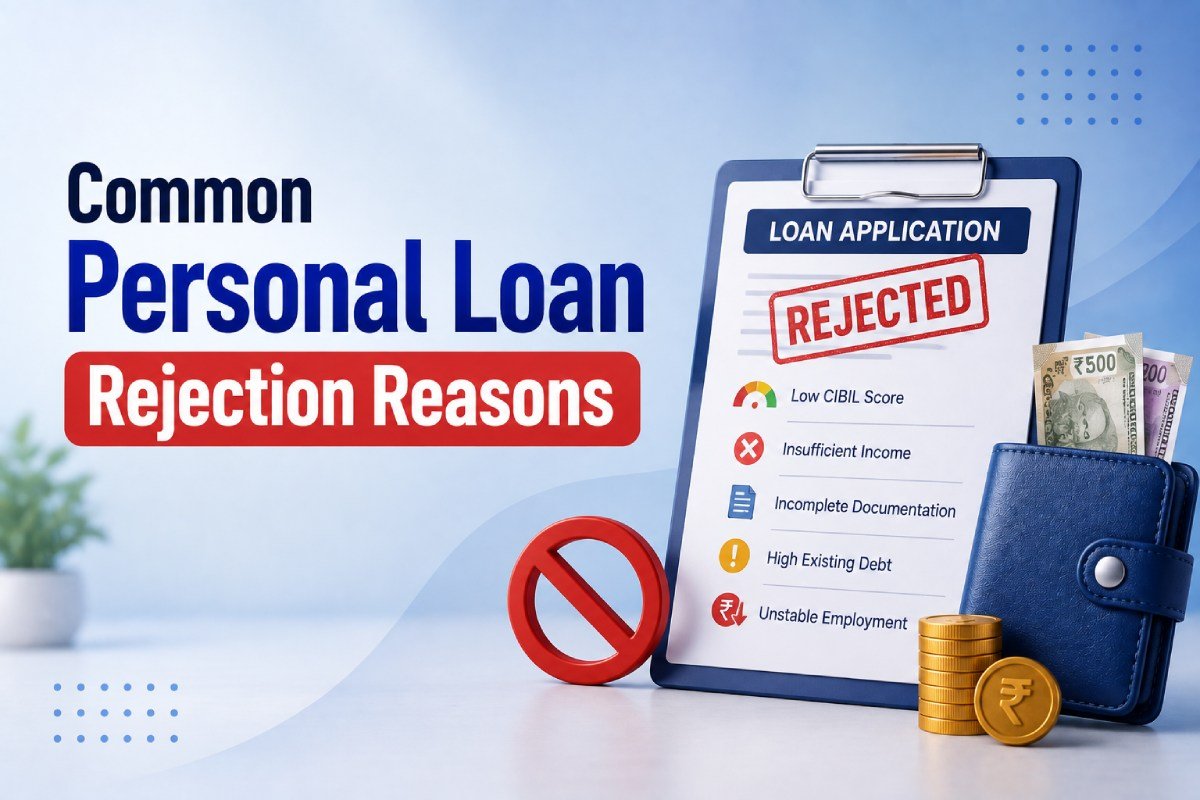
A Personal Loan can be useful when you need funds for an emergency, education, medical expenses, home improvements, travel, or other personal requirements. However, submitting an application does not guarantee approval. Lenders carefully evaluate an applicant’s financial profile before deciding whether to approve a loan.
Understanding the common personal loan rejection reasons can help you identify potential issues and make better financial decisions. Factors such as credit score, income, existing debt, employment history, documentation, and lender-specific eligibility criteria can all affect loan approval.
Low CIBIL Score
One of the major reasons for personal loan rejection can be a low CIBIL score. Your credit score gives lenders an indication of how you have managed credit in the past.
Missed EMIs, delayed credit-card payments, loan defaults, and high credit utilization can negatively affect your credit profile. Since a personal loan is generally unsecured, lenders may consider credit history an important part of their risk assessment.
A low score does not necessarily mean automatic rejection, but it can make approval more difficult.
Insufficient Monthly Income
Lenders want to ensure that borrowers have enough income to repay their loans. If your monthly income does not meet the lender’s requirements, your application may be rejected.
The lender may also compare your income with your proposed EMI and existing financial commitments. Even if you earn a regular salary, a high level of existing debt could reduce your borrowing capacity.
High Existing Loan Obligations
Having several active loans or large credit-card balances can be another reason for rejection. Lenders may calculate your existing financial obligations to determine whether you can comfortably handle another EMI.
If most of your monthly income is already being used for loan repayments, taking another personal loan may increase your financial burden.
Reducing unnecessary debt before applying can help improve your overall financial position.
Unstable Employment
Employment stability can influence personal loan eligibility. Frequent job changes, a short employment history, irregular employment, or inconsistent income may make it difficult for lenders to assess your repayment capacity.
Salaried applicants may need to meet minimum employment requirements, while self-employed applicants may be required to provide documents demonstrating stable business income.
The exact requirements vary between lenders.
Incomplete or Incorrect Information
Another common personal loan rejection reason is incorrect or incomplete information in the application.
For example, differences between your name, address, employment details, income information, or bank details and the supporting documents may create verification issues.
Always double-check your application before submitting it and provide accurate information.
Poor Repayment History
A credit score is influenced by your repayment behavior. A history of missed or delayed payments can make lenders cautious about approving another loan.
If you have previously failed to make repayments on time, lenders may consider you a higher-risk borrower.
Maintaining timely payments on existing loans and credit cards is one of the most important ways to build a stronger credit profile over time.
Too Many Recent Loan Applications
Applying for several loans within a short period can result in multiple hard inquiries on your credit report.
Multiple recent inquiries may indicate that you are actively seeking credit from different lenders. This can potentially affect how lenders view your credit profile.
Instead of applying to numerous lenders, compare their eligibility criteria and select an option that matches your financial situation.
Limited Credit History
Having a limited credit history can also make loan approval challenging. If you have never used a credit card or taken a loan, the lender may have limited information about your repayment behavior.
This is different from having a poor credit history, but some lenders may still find it difficult to assess your creditworthiness.
Errors in Your Credit Report
Sometimes, rejection can occur because of inaccurate information in a credit report. An account may incorrectly show an outstanding balance, or a payment may be reported as delayed even though it was made on time.
Checking your credit report regularly can help you identify such errors. If you find incorrect information, you can contact the relevant lender or credit bureau and follow the applicable correction process.
Not Meeting Lender-Specific Eligibility
Every lender has its own eligibility requirements. These may include minimum age, income, employment status, credit score, location, and other conditions.
Therefore, having a good credit score does not guarantee approval. If you do not meet a particular lender’s eligibility criteria, the application may still be rejected.
Checking the requirements before applying can help avoid unnecessary applications.
How to Reduce the Risk of Personal Loan Rejection
Before applying for a personal loan, review your credit report and assess your existing financial commitments. Make sure your income is sufficient to manage the proposed EMI.
Pay your existing bills and EMIs on time, reduce unnecessary debt, avoid making multiple applications, and ensure that all documents are accurate and complete.
If your loan application has already been rejected, identify the possible reason and work on improving that area before applying again.
Conclusion
There are many common personal loan rejection reasons, and rejection does not necessarily mean that you cannot qualify for a loan in the future. Low CIBIL score, insufficient income, high existing debt, unstable employment, poor repayment history, incomplete documentation, and lender-specific criteria can all influence the decision.
Before applying, understand the lender’s requirements, review your financial situation, and borrow only an amount that you can comfortably repay. Responsible credit management and timely repayments can also help strengthen your financial profile over time.
FAQs About Personal Loan Rejection
1. Why can a personal loan application be rejected?
A personal loan application may be rejected because of a low credit score, insufficient income, high existing debt, unstable employment, poor repayment history, incomplete documentation, or failure to meet the lender’s eligibility requirements.
2. Can my CIBIL score affect personal loan approval?
Yes. CIBIL score can be an important factor in the lender’s assessment. A lower score may make approval more difficult, although lenders may consider other aspects of your financial profile as well.
3. Does having existing loans affect personal loan approval?
Yes. Lenders may consider your existing EMIs and other financial obligations when evaluating your repayment capacity. High existing debt can reduce the likelihood of approval.
4. Can I apply again after my personal loan is rejected?
Yes, but it is generally better to understand and address the reason for rejection before submitting another application. Avoid making multiple applications within a short period.
5. How can I improve my chances of personal loan approval?
Maintain timely repayments, reduce existing debt, maintain stable income, check your credit report for errors, avoid unnecessary credit inquiries, and provide complete and accurate information when applying.