Choosing the right interior design is an important decision because your surroundings can influence comfort, functionality, mood, and overall lifestyle. Whether you are designing a new home, renovating an existing property, or creating a commercial space, the right design should combine aesthetics with practicality.
A beautiful interior is not necessarily a successful interior. The space should also be comfortable, easy to use, suitable for your needs, and within your budget. By considering a few important factors, you can create an interior that looks attractive and remains useful for years.
Understand Your Space
The first step is to understand the size, shape, layout, and purpose of your space. Every room has different requirements. A bedroom needs privacy and comfort, while a living room may require more seating and open space.
Measure the available area and consider doors, windows, electrical points, natural light, and existing architectural features before selecting furniture or décor.
Define Your Design Style
Before starting the project, decide what type of atmosphere you want to create. You may prefer modern, minimalist, contemporary, traditional, industrial, Scandinavian, or another interior style.
Looking at design inspiration can help you identify colors, furniture styles, materials, and layouts that match your preferences.
Consider Functionality
Functionality should always be an important part of interior design. Every piece of furniture and decorative element should have a purpose.
For example, a family home may require additional storage, comfortable seating, and durable materials. An office may need ergonomic furniture, workstations, meeting areas, and proper lighting.
Choose the Right Color Scheme
Colors have a major impact on how a room looks and feels. Light shades can make smaller rooms appear more spacious, while darker shades can create a warm and sophisticated atmosphere.
Choose a color palette that complements your furniture, flooring, lighting, and overall design style. Using too many colors can make a space look unbalanced, so maintaining a consistent palette is usually more effective.
Focus on Lighting
Lighting can completely change the appearance of an interior. Make use of natural light wherever possible and combine it with suitable artificial lighting.
Ambient lighting provides general illumination, task lighting supports specific activities, and accent lighting can highlight artwork, furniture, or architectural features.
Select Suitable Furniture
Furniture should match the size and purpose of the room. Avoid choosing large furniture simply because it looks attractive in a showroom.
Consider dimensions, comfort, quality, functionality, and maintenance requirements. Furniture should leave enough space for people to move around comfortably.
Choose Quality Materials
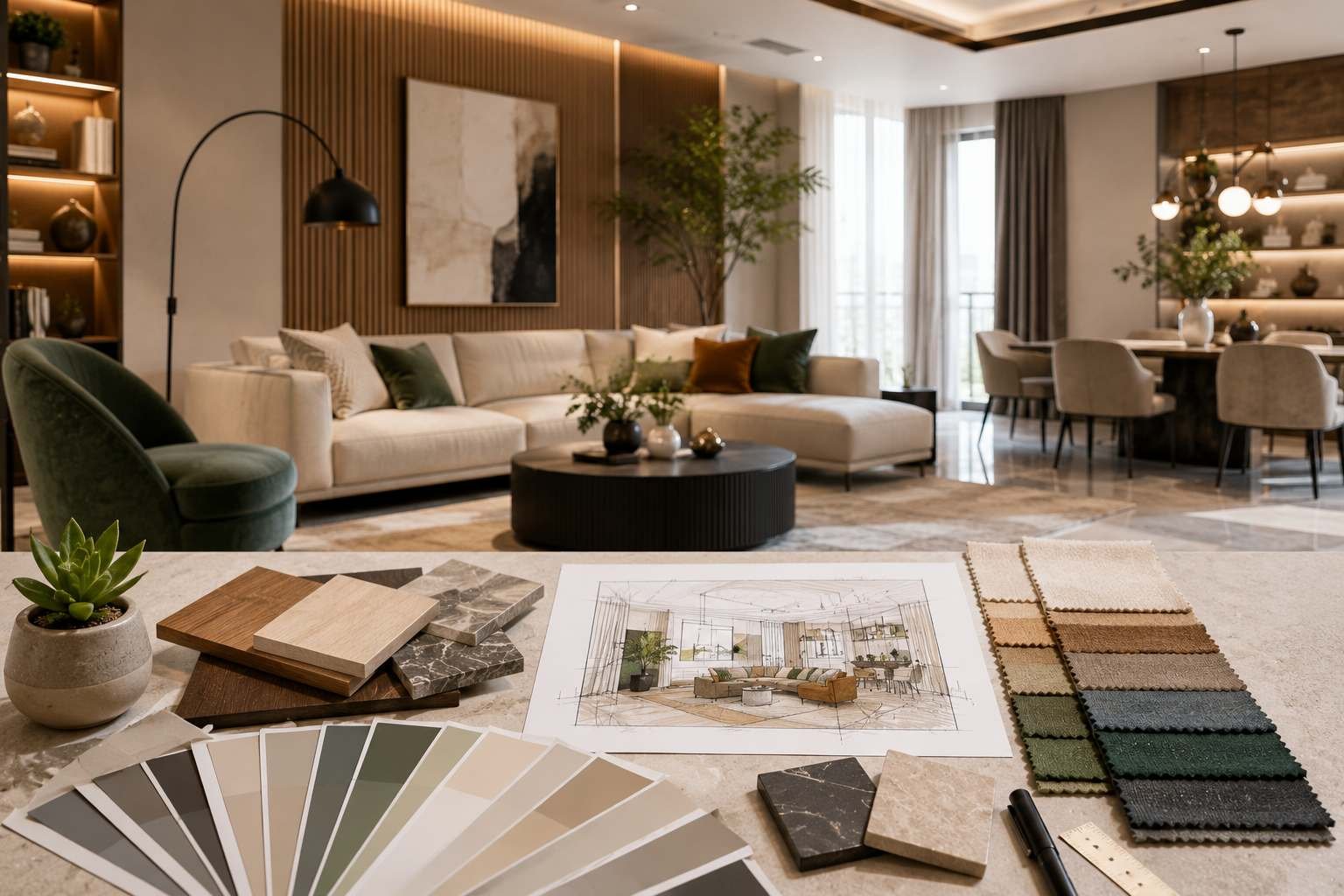
The materials used in an interior affect its appearance, durability, and maintenance. Flooring, countertops, cabinets, wall finishes, fabrics, and fixtures should be selected according to how the space will be used.
For high-traffic areas, durable and easy-to-maintain materials may be more practical than delicate finishes.
Plan Your Budget
A clear budget can help prevent unnecessary expenses. Divide your budget between furniture, materials, lighting, décor, labor, and other project requirements.
It is also useful to keep some additional funds available for unexpected costs that may occur during renovation or installation.
Think About Storage
Storage is often overlooked when planning interiors. A well-designed space should have enough storage without making the room feel crowded.
Built-in cabinets, modular storage, shelves, storage beds, and multifunctional furniture can help keep belongings organized while maintaining a clean appearance.
Consider Long-Term Needs
Interior design should not only suit your current lifestyle but also consider future requirements. A family may need additional space as children grow, while a home office may become more important as work patterns change.
Choosing flexible furniture and adaptable layouts can make the interior more useful in the long term.
Balance Style and Comfort
Following the latest design trends can make a space look modern, but trends can change quickly. Instead of using every popular trend, choose timeless elements and add trendy features through accessories that can be easily replaced.
Comfort should remain a priority. A stylish room that is uncomfortable or difficult to use will not provide a satisfying experience.
Consider Professional Help
For larger projects, working with an interior designer can make the process easier. Professionals can help with space planning, material selection, furniture placement, lighting, color combinations, budgeting, and project coordination.
An experienced designer can also identify potential problems before construction or installation begins.
Conclusion
Choosing the right interior design requires careful consideration of your space, lifestyle, budget, personal preferences, and future needs. The best interior is one that successfully combines style, comfort, functionality, and practicality.
Instead of focusing only on appearance, consider how you will use the space every day. With thoughtful planning and the right design choices, you can create an interior that is attractive, comfortable, functional, and suited to your lifestyle.
FAQs
How do I choose an interior design style?
Start by identifying the colors, furniture, materials, and overall atmosphere you prefer. Modern, minimalist, traditional, contemporary, and industrial styles are some popular options.
What should I consider before designing an interior?
Consider the size of the space, purpose of each room, budget, preferred style, lighting, storage requirements, furniture, and long-term needs.
Is functionality more important than appearance?
Both are important. A successful interior should look attractive while also being comfortable, practical, and easy to use.
Should I hire an interior designer?
For complex renovations or large properties, an interior designer can provide professional guidance and help manage important design decisions.
How can I make my interior design timeless?
Choose quality materials, neutral or balanced colors, comfortable furniture, simple layouts, and classic design elements rather than relying heavily on short-term trends.