
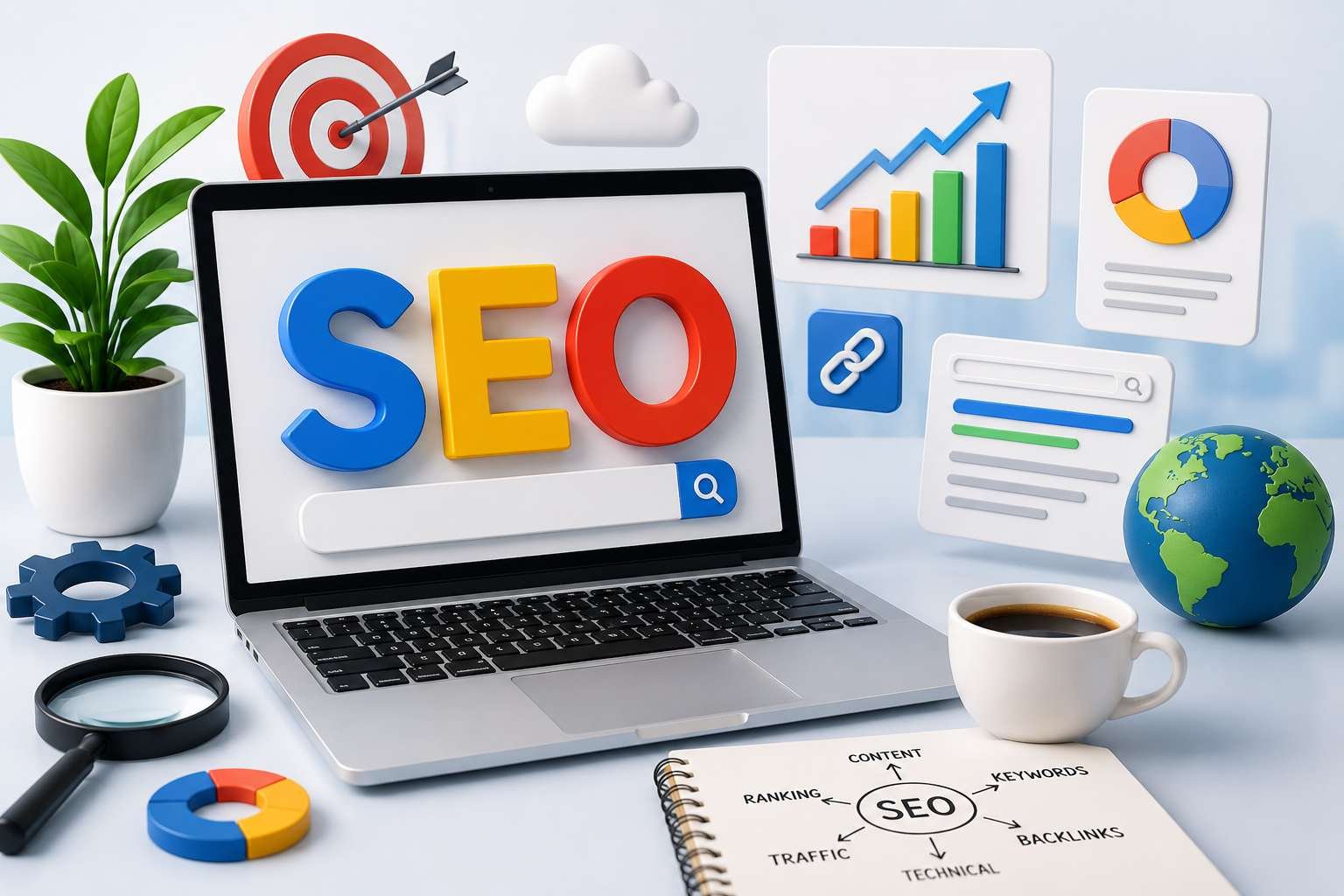
What Is SEO and How Does It Help a Website Grow?
SEO, or Search Engine Optimization, is one of the most important digital marketing strategies for improving a website’s visibility on search engines. It involves optimizing website content, technical elements, and overall online presence so that search engines can better understand and rank the website for relevant searches.
Whether you run a small business, ecommerce store, blog, or service-based website, SEO can help you attract people who are actively searching for your products, services, or information.
How Does SEO Help Websites?
The primary purpose of SEO is to increase organic traffic. Organic traffic refers to visitors who reach your website through unpaid search engine results.
When a website appears prominently for relevant searches, it has a greater opportunity to attract potential customers. SEO can therefore contribute to increased website visits, brand awareness, leads, and sales.
Why Is SEO Important for Businesses?
Most customers begin their online research by searching for information, products, or services. If your website does not appear when potential customers search for relevant terms, you may miss valuable opportunities.
A well-planned SEO strategy can help businesses establish a stronger online presence. It can also improve the quality of website traffic by targeting searches that are relevant to the business.
SEO can be particularly useful for businesses competing in crowded markets because consistent optimization can help strengthen their organic visibility over time.
How Does Search Engine Optimization Work?
Search engines use automated systems to discover and understand webpages. They then evaluate numerous signals to determine which pages may be useful for a particular search.
SEO helps search engines understand a website’s content while also making the website easier and more useful for visitors.
This can involve optimizing content, improving website structure, fixing technical issues, improving page experience, and earning relevant links from other websites.
Important Parts of SEO
Keyword Research
Keyword research involves identifying the words and phrases people use when searching for information, products, or services.
For example, a digital marketing company might target searches related to SEO services, digital marketing services, or local SEO.
Understanding search intent is just as important as identifying keywords. A person searching for “what is SEO” has a different intention from someone searching for “SEO agency near me.”
Quality Content
Content is an important part of SEO. Websites should publish useful, original, accurate, and relevant information that addresses their audience’s needs.
Blog articles, guides, service pages, product descriptions, FAQs, and case studies can all contribute to a strong content strategy.
The goal should be to provide genuine value rather than simply creating pages to target keywords.
Technical SEO
Technical SEO focuses on the underlying structure and performance of a website.
This can include crawlability, indexing, website speed, mobile usability, site architecture, redirects, canonical URLs, XML sitemaps, and structured data.
Technical improvements can help search engines access and understand website content more effectively.
On-Page Optimization
On-page SEO includes optimizing individual webpages. This may involve page titles, headings, URLs, images, internal links, meta descriptions, and the main content.
Each page should have a clear topic and satisfy the searcher’s intent.
Link Building
Links from other relevant and trustworthy websites can help strengthen a website’s authority and discoverability.
Effective link building should focus on earning valuable references through useful content, partnerships, digital PR, and genuine industry resources rather than creating large numbers of artificial links.
SEO for Local Businesses
Local SEO helps businesses improve visibility for searches connected to a specific geographic area.
Businesses can optimize their website, business information, location pages, and online profiles to make it easier for potential customers to discover them.
Accurate business information and consistent online details are especially important for local search.
SEO for Ecommerce Websites
For ecommerce websites, SEO can help products and category pages become more discoverable through search engines.
Optimizing product titles, descriptions, category structures, images, internal links, and useful buying information can help search engines understand what a store sells.
A technically strong ecommerce website is also important because large stores can contain thousands of pages.
How Long Does SEO Take?
SEO does not normally produce guaranteed overnight results. The timeline depends on competition, website authority, technical condition, content quality, industry, and the SEO strategy being implemented.
Some improvements may produce noticeable changes relatively quickly, while competitive searches can require consistent effort over a longer period.
SEO should therefore be viewed as an ongoing marketing investment.
Common SEO Mistakes
Keyword stuffing, duplicate content, poor website structure, slow pages, low-quality backlinks, and publishing content without understanding search intent are common SEO problems.
Another mistake is focusing entirely on rankings while ignoring conversions.
A successful website should not only attract visitors but also provide a good experience that encourages users to contact the business, make a purchase, or take another valuable action.
How to Create a Basic SEO Strategy
Start by understanding your target audience and researching relevant search topics. Review your website for technical problems and optimize important pages.
Create useful content around topics that genuinely help your audience. Strengthen internal linking and work toward earning relevant, high-quality backlinks.
Finally, monitor organic traffic, search performance, conversions, indexing, and other important SEO metrics. Use the data to continually improve your strategy.
Conclusion
SEO is a long-term digital marketing strategy that helps websites improve their organic visibility and attract relevant visitors from search engines.
It combines keyword research, valuable content, technical optimization, on-page improvements, internal linking, and off-page strategies.
Whether you operate a local business, ecommerce store, personal blog, or large website, a well-planned SEO strategy can help build sustainable online visibility and create more opportunities for growth.
FAQs About SEO
1. What is SEO in simple words?
SEO is the process of improving a website so that search engines can understand it better and show it to users searching for relevant information, products, or services.
2. What are the main parts of SEO?
The major areas include technical SEO, on-page SEO, content optimization, keyword research, internal linking, and off-page SEO.
3. Can SEO increase website traffic?
Yes. Effective SEO can improve a website’s organic visibility and help attract more relevant visitors from search engines.
4. Is SEO free?
Organic search traffic does not require paying for every click, but SEO itself may involve costs for content creation, technical work, tools, professional services, and other resources.
5. Is SEO important for small businesses?
Yes. SEO can help small businesses reach people actively searching for their products or services and can be particularly valuable for building local and long-term online visibility.